Protein is one of the three major macronutrients (nutrients that the body needs in larger amounts). It is comprised of 20+ blocks known as amino acids and it is super complex so it’s no wonder there is a ton of confusion around protein.
Don’t fear though, we will break it down in simple Q&A form below.
What does protein do in the body?
Protein is found in every single cell of the body. The main function of protein is to create, grow and repair cells in the body which is why it ESSENTIAL for building muscle mass in the body.
In more scientific terms, protein provides the structure for tissues in the body and is also responsible for regulating many processes such as transporting oxygen in the blood, and balancing pH levels/fluids in the body. Proteins also make up the fundamental building block of bones, cartilage, organs, skin, blood, hair, and nails. They are responsible for making antibodies (which helps with immunity), regenerating tissue and healing wounds, creating select hormones, and storing nutrients to provide energy. In short, proteins perform the majority of the work in living cells.
So no, protein is not just for regular gym goers and bodybuilders. It is for EVERYONE!
How much protein do I need?
Even if you are not active at all, it is still recommended to get .6 grams of protein per LB of current bodyweight or 1.4 grams per KG of bodyweight.
For a 150lb or 68kg person, this equates to roughly 90-95g of protein a day which is FAR over what most people get a day, sadly.
Since this is a gym blog though and I know you are all active….
You should aim to get about 1g of protein per LB of bodyweight or 2.2g of protein per KG of bodyweight.
For a 150lb or 68kg person, this equates to 150g of protein a day, which is 60g over the bare minimum recommendation for non-active people.
There is a LOT of confusion as to whether you should use your current body weight or goal body weight in the equation so let’s clear that up here.
I recommend if you’re not bulking or cutting to use your CURRENT body weight.
If you have a fat loss or muscle gain goal, use your goal weight BUT..
If your goal weight is far from your current weight, use small 10 lb increments as your goal weight.
For example, if you’re 200lbs and want to be 150lbs, make your first goal weight 190lbs. Use 190 to multiply by 1g of protein.
This works in reverse too.
For example, if you’re 100lbs and want to be 140lbs, start with your first goal weight as 110lbs and multiply 110 by 1g of protein.
The simplified response to this is when in doubt, just use your current body weight. Your protein goal adjusts as your body weight does. You can’t be eating for a weight goal that you are nowhere near.
You should adjust your goals every 10lbs you gain or lose.
Should I eat the same amount of protein on rest days?
Absolutely!! Your calorie and macro goal should stay the same on rest days as training days. This is for simplicity.
Of course if you want to or if you are at a more advanced level, it is okay to switch up your calories and macros on training/rest days based on how hungry you are on those days or if you feel it works better for you. It won’t have an impact on overall fat loss or muscle gain though as long as you still are in range of your weekly calorie/macro goal.
Is protein powder safe and do I really need it?
Yes, protein powder has been ruled generally safe for many decades but it is not tightly regulated by the FDA. I would be careful with what ingredients are in the protein powder you are buying. I tend to stick to brands with natural ingredients for this reason.
You do not NEED to take a protein powder supplement as you can get all of your protein from real food. It is recommended to get about 80% of your protein from real food each day.
That means that if your protein goal is 150g, 120g should come from real food and 30g is fine to supplement. This can be anything from protein powders to protein bars, or other protein supplements that are not natural from food. I’d argue you could even do 70% but the point is that the MAJORITY of your protein intake should come from real food. It is a problem if you are getting 70% of your protein from powders and bars each day.
Not only does that mean your diet is probably unhealthy and you’re lacking many micro and some macro nutrients, but the artificial sweeteners and other ingredients in these products can leave you with a very upset stomach.
What are the most common types of protein powder?
- Whey – A fast-absorbing milk-based protein that boosts muscle growth and recovery
- You may find this in “concentrate” or “isolate” form
- Isolate has more protein per weight, less lactate and less calories. It generally is more expensive
- Casein – A protein found in milk that gradually builds muscle mass and aids fat loss
- Plant – Derived from plant products only such as pea and rice, or a pure soy protein
Which is best for you?
The most popular form of protein found at stores and in protein bars is whey concentrate. It is perfectly good for all your weight lifting needs and supplementing your protein goal plus it digests quickly.
You may want to consider Casein if you need to stay fuller for a longer period of time since it is slow digesting. Example, it makes sense if you have it for breakfast and won’t be able to eat anything for a few or many hours after.
Plant is a great option for vegetarians or vegans. You can still use it though even if you aren’t either of those. Maybe you like the taste of it better, it really is personal preference!
What brands do you recommend?
My favorite protein powder is currently from Legion. I recommend it due to the 100% natural ingredients they use and science based research. All ingredients are FDA approved which is not common because the supplement industry is not tightly regulated as I said above.
It is not the best tasting protein out there ON ITS OWN by any means due to the natural flavoring, but it mixes very well with other ingredients to make protein smoothies/milkshakes and other protein baked goods or recipes.
Code ERFIT to save 20% off!
The brand I like the best for convenience is Premier Protein since they come pre-bottled and are sold almost everywhere. Like many other protein brands out there though, I don’t think the ingredients are the best.
What foods are high in protein?
Main sources of protein include:
- Chicken
- Turkey
- Beef
- Pork
- Fish
- Eggs/egg whites
- Tofu (vegan option)
- Tempeh (vegan option)
- Edamame (vegan option)
- Seltan (vegan option)
- Lentils (vegan option)
- Tuna (in the can)
- Beans (vegan option)
- Greek yogurt
Additional foods that include a reasonable amount of protein:
- Cheese sticks
- Cottage cheese
- Milk
- Quinoa
- Seeds and nuts
- Turkey pepperoni
- Beef jerky
- Peanut butter
- Green peas
- Broccoli
Protein content of the foods listed above:
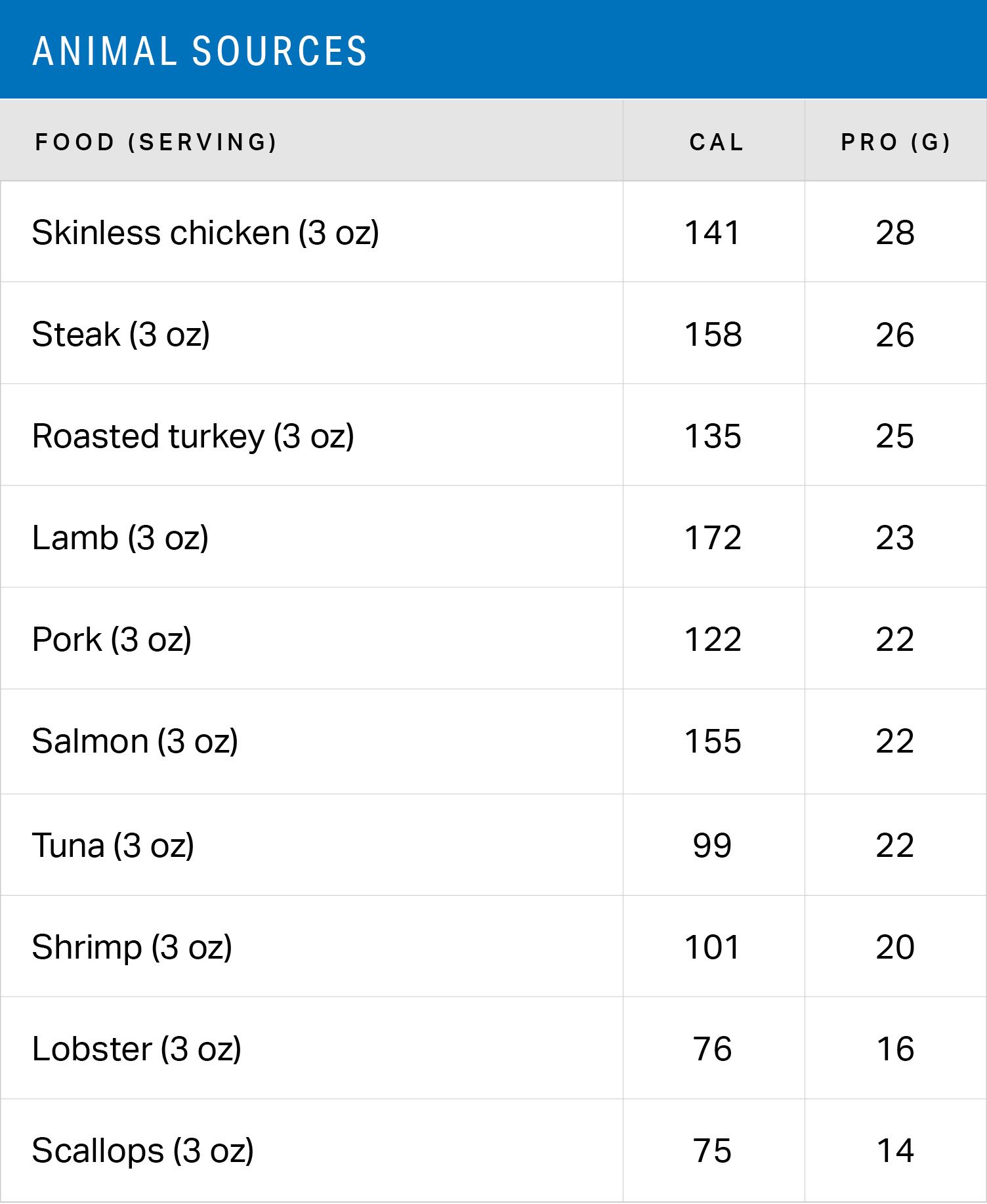
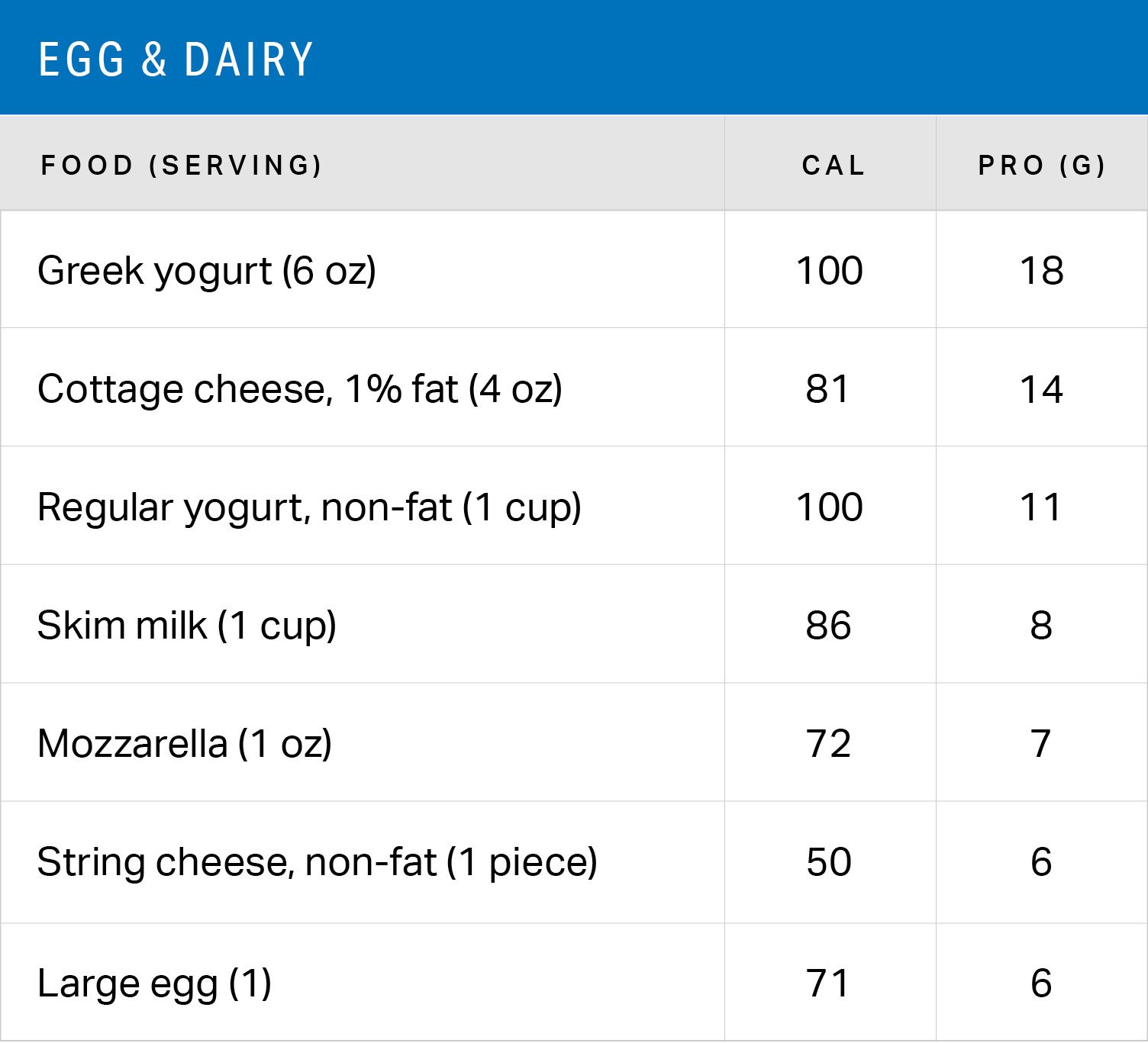


What is the best time to consume protein?
There are benefits to consuming protein at each meal throughout the day and trust me, you’ll need to if you plan to hit your protein goal.
The two most important times of the day are in the morning as it helps to keep you more satiated throughout the day and after your workouts as usually you’re pretty hungry from all that energy you burned off!
You should have about 30-40g of protein in each of your meals/snacks in order to hit your protein goal throughout the day.
Do NOT load all your protein into one massive meal. It is not efficient.
While your body can absorb and digest more than that, it generally only uses about 40g in a sitting to build muscle mass. This means the rest of the protein is going elsewhere in the body to regulate other processes, which isn’t necessarily a BAD thing but its just more efficient to spread it out over the day to get the most muscle building benefits, even if your goal is fat loss.
Do I need to consume protein right after my workout?
In short, no. The theory of an “anabolic window” has tested to not correlate tightly together with building more muscle mass in many studies.
If you’ve never heard of this, the theory of an anabolic window is that you have to consume protein or a protein shake within 30 minutes of your workout to maximize gains.
This is honestly just not true. The window is much wider than originally thought. While I wouldn’t say its okay to have NO protein at all after your workout, waiting a couple of hours isn’t going to kill your gains. Always make sure to refuel within a couple hours of your workouts for best results whether it be a full meal or protein snack.
Conclusion
Protein can be a confusing topic for many but this guide should help you out tremendously to get started.
If you’re looking for full meal ideas, my high protein recipe guide includes 30+ recipe ideas for breakfast, lunch, dinner & snack time. You can purchase it here:
If you are struggling finding good protein bars or snacks – check out the list of my favorite protein products I made on Amazon using the link below:
P.S If you’re looking for challenges, pre-built workouts, recipes, and other guidance, check out my new Freshman Fitness App now:
Until next time,
Coach Emily
-
Stress & Sleep: The Missing Keys to Your Fitness Goals
If you’re training hard and eating well but still not seeing results, it’s time to take a look at two of the most underrated and overlooked factors in fat loss and muscle gain.. stress regulation and sleep quality. Your body doesn’t just need calories and workouts, it needs recovery, hormone balance, and nervous system support.…
-
Revamp Your Metabolism: A Beginner’s Guide to Boosting Energy and Burning Fat
Photo creds Your metabolism is like the engine that powers your body’s energy production and weight management. It’s responsible for converting the food you eat into energy, fueling your daily activities and bodily functions. However, factors like age, genetics, and lifestyle choices can impact your metabolic rate, leading to sluggishness and difficulty in managing weight.…
-
Avoid These 5 Mistakes When Tracking Calories
Tracking calories can be a powerful tool for managing your weight, improving your health, or achieving specific fitness goals. However, if done incorrectly, it can lead to frustration and less-than-optimal results. Here are five common mistakes to avoid when tracking calories to ensure you get the most out of your efforts. 1. Underestimating Portion Sizes…
-
How to Curb Cravings Without Getting Too Restrictive: Indulging in Moderation
Cravings are a common part of life, and while it’s important to maintain a healthy diet, it’s equally crucial not to get overly restrictive. After all, food is meant to be enjoyed. Finding a balance between curbing cravings and allowing yourself to indulge occasionally can be the key to long-term success in maintaining a healthy…
-
Sticking to Your Fitness and Nutrition Regimen While Traveling
Traveling can be an exciting and enriching experience, but it often throws a wrench in our usual fitness and nutrition routines. Whether you’re on a business trip or vacation, it’s possible to maintain your healthy habits with some planning and creativity. Below are some tips to help you stay on track with your fitness and…
-
A Beginners Guide to Building Strong and Sculpted Legs
Building strong, sculpted legs is a key goal for many gym goers, and for good reason. Strong legs improve overall athletic performance, enhance balance and stability, and play a vital role in daily activities. Plus, they look amazing! Duh. Whether you’re just starting your fitness journey or looking to refine your leg workout routine, this…

 The Freshman Fitness Blog by Emily Robinson
Leave a comment