Everyone is always ranting and raving about macros, which to be fair, they should be, but micronutrients are often forgotten about.
The problem is that while micronutrients don’t play as an important role as macros, they still do contribute to your overall health and performance quite a bit.
Micronutrients are generally categorized as either vitamins or minerals that the body needs in small(er) doses.
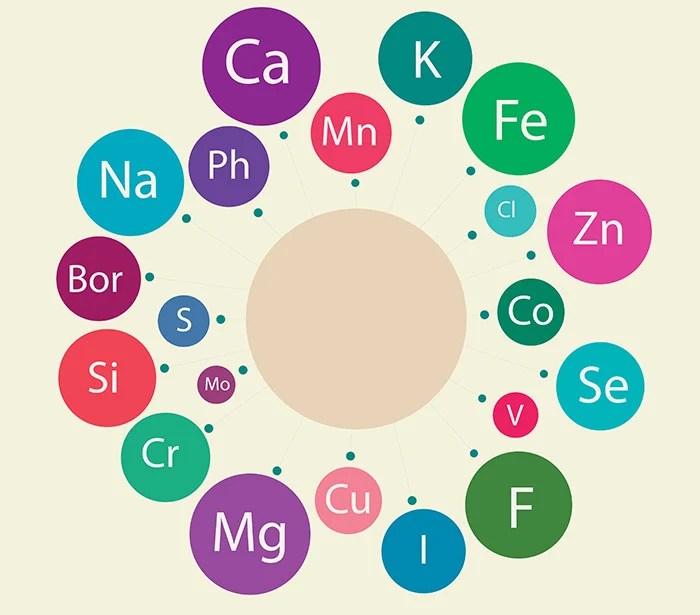
Vitamins
Vitamins can be broken down into both water soluble and fat soluble.
Water Soluble Vitamins
These are defined as vitamins that can dissolved in water and they are seen in the blood and other water based fluids within the body. They are considered to be ESSENTIAL to the body.
Examples are Vitamins B (1,3,9,2,6,7,12) and Vitamin C.
Vitamin B complex is actually very important for a lot of bodily functions to work.
The most popularized one is Vitamin B12.
Vitamin B12 is required for the formation of red blood cells and is required the creation of DNA molecules.
Generally speaking, vitamin B12 is found in animal products like meat, fish, eggs, poultry & dairy.
A deficiency in B vitamins overall can cause fatigue as they play an important role in energy metabolism but generally it is not due to the fact that your body is not having enough B vitamins, but rather that it is not absorbing enough of it.
This can be caused by an array of things such as anemia, overgrowth of bacteria in the gut, drinking too much alcohol, certain digestive diseases, having bariatric surgery, etc.
Vitamin C, as we know, is responsible for supporting our immune systems which is pretttttty important to idk… LIFE.
It also helps protect cells and heal wounds, as well as maintain healthy skin, blood vessels, bones, and cartilage.
Main sources of vitamin C include citrus fruits (oranges, lemons, limes, grapefruit), peppers, strawberries, broccoli, and other vegetables.
Fat Soluble Vitamins
These are defined as vitamins that dissolve in fats and oils.
They are stored within the body’s fat tissues opposed to in the blood or water based body fluids. They can only be absorbed along with dietary fats which is why the fat macro is very important to our body as well (helps us digest essential vitamins).
Examples are Vitamin A, D, E & K.
Vitamin A plays a role in our vision, teeth, skin, soft tissue, skeleton & immune function!
Sources are oily fish, liver, egg yolks, milk & butter.
Vitamin D regulates calcium absorption, plays a role in muscle function/repair, brain development/function and the immune system.
Sources are oily fish, eggs and fortified foods such as cereals + natural sunlight exposure.
Vitamin E protects our cells from damage, supports eye/skin health & plays a role in growth/development and immune function.
Sources are almonds, peanuts, shrimp, sunflower seeds, and various seed oils.
Vitamin K regulates blood balance and controls clotting, heals wounds, and forms some proteins in the body. It also plays a role in bone formation/remodeling and works alongside Vitamin D (in synergy).
Sources are cruciferous vegetables such as broccoli, cauliflower & cabbage.
Minerals
Minerals can also be broken out into both micro- and macro-minerals.
Microminerals are needed in the body in smaller doses while macro are needed in larger doses.
For this post, we will only be going over the macrominerals.
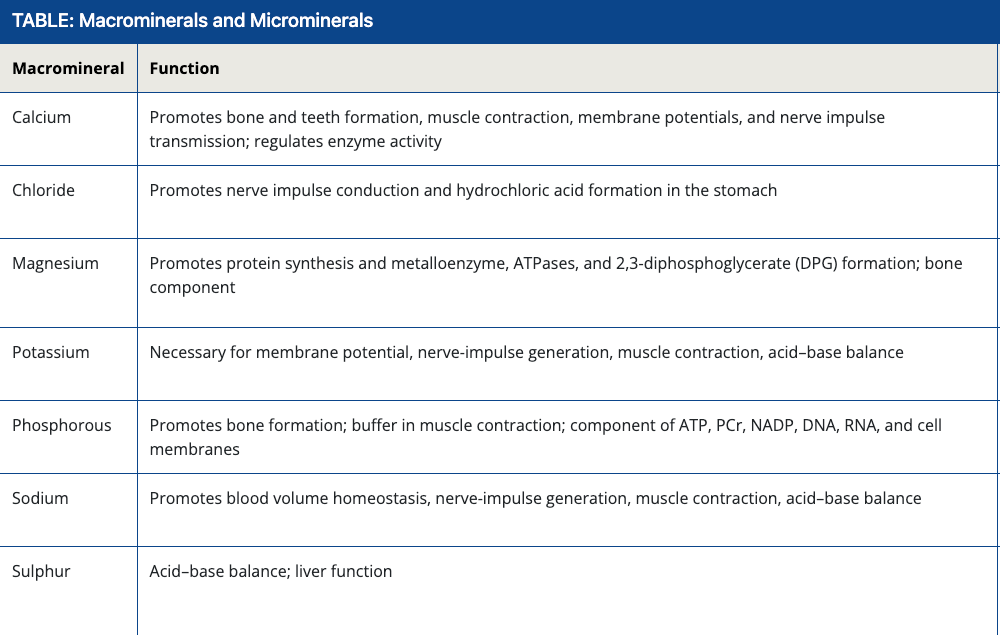
The top are calcium, chloride, magnesium, potassium, phosphorus, sodium & sulphur.
Similar to vitamins, minerals are elements that our bodies need in order to function properly.
NASM put together this great chart listing our the function of each of the macrominerals:
Common Deficiencies
The most common vitamin deficiencies are Vitamin A, B & D.
The most common mineral deficiencies are calcium, iron, zinc, iodine & folate.
Conclusion
Both minerals and vitamins have RDA’s (recommended daily allowances) that you can easily Google if interested in knowing more about each.
It is not recommended to go above the UL or upper limit which you can also Google for each of the nutrients listed above.
If you are unsure of which vitamins and minerals to supplement with/if you even NEED to supplement with them, discuss first with your primary doctor.
When you don’t get enough micronutrients, it can lead to many different diseases, including heart disease and various cancers.
These are all things you can track with your macros if you really want in an app like MyFitnessPal.
I also highly recommend checking out the post I made on macronutrients if you haven’t already.
Until next time,
Coach Emily
-
Stress & Sleep: The Missing Keys to Your Fitness Goals
If you’re training hard and eating well but still not seeing results, it’s time to take a look at two of the most underrated and overlooked factors in fat loss and muscle gain.. stress regulation and sleep quality. Your body doesn’t just need calories and workouts, it needs recovery, hormone balance, and nervous system support.…
-
Revamp Your Metabolism: A Beginner’s Guide to Boosting Energy and Burning Fat
Photo creds Your metabolism is like the engine that powers your body’s energy production and weight management. It’s responsible for converting the food you eat into energy, fueling your daily activities and bodily functions. However, factors like age, genetics, and lifestyle choices can impact your metabolic rate, leading to sluggishness and difficulty in managing weight.…
-
Avoid These 5 Mistakes When Tracking Calories
Tracking calories can be a powerful tool for managing your weight, improving your health, or achieving specific fitness goals. However, if done incorrectly, it can lead to frustration and less-than-optimal results. Here are five common mistakes to avoid when tracking calories to ensure you get the most out of your efforts. 1. Underestimating Portion Sizes…
-
How to Curb Cravings Without Getting Too Restrictive: Indulging in Moderation
Cravings are a common part of life, and while it’s important to maintain a healthy diet, it’s equally crucial not to get overly restrictive. After all, food is meant to be enjoyed. Finding a balance between curbing cravings and allowing yourself to indulge occasionally can be the key to long-term success in maintaining a healthy…
-
Sticking to Your Fitness and Nutrition Regimen While Traveling
Traveling can be an exciting and enriching experience, but it often throws a wrench in our usual fitness and nutrition routines. Whether you’re on a business trip or vacation, it’s possible to maintain your healthy habits with some planning and creativity. Below are some tips to help you stay on track with your fitness and…
-
A Beginners Guide to Building Strong and Sculpted Legs
Building strong, sculpted legs is a key goal for many gym goers, and for good reason. Strong legs improve overall athletic performance, enhance balance and stability, and play a vital role in daily activities. Plus, they look amazing! Duh. Whether you’re just starting your fitness journey or looking to refine your leg workout routine, this…
 The Freshman Fitness Blog by Emily Robinson
Leave a comment