Unless you’re truly measuring everything accurately with a scale or with measuring cups/spoons, it is very hard to “eye” a serving size unless you’re a food measuring veteran.
Because of this, many people are overeating and underestimating the amount of calories they are eating day to day which can cause progress to hault or never even begin in the first place.
The first thing we need to understand is how to accurately read a nutrition label.
Deciphering Nutrition Labels

The first thing to note is the actual serving size listed on the label AND the amount of servings per container. This will be different for every product. Sometimes the amount of calories listed is the whole amount, sometimes it’s broken out so make sure you pay attention to that.
Generally measurement units will differ on every product too, which I never truly understood.
For example, one brand of milk may be measured in cups while another is measured in oz or ml so it’s always good to double check the specific brand of products that you are using.
Next, you’ll want to check the calorie content. Again, even for the same exact products, different brands will range in calories and macros so don’t mistrack by using a different brand because it’s “close enough”.
From there, I would check out the macro contents (carbohydrates, fats, and protein).
I always personally check the calories and protein content first, then move by way up to carbs and then fats.
Then I check the micronutrients – sugars (added specifically), sodium, fiber, vitamin D, calcium, iron, and potassium.
A few things you may want to steer clear from are products with very high calories, high sodium, too many added sugars, and high saturated/trans fats.
I personally like to see a moderate carb and fat proportion, high protein, high fiber and high in vitamins and other nutrients on labels of foods I am eating (although that’s not always possible due to the different make up of different types of foods).
In my opinion, the DV(%) should be ignored as its based on a 2000 calorie diet and every single person eats a different amount of calories every day and has a different macro split they follow.
How to properly measure food
There are 3 methods I generally recommend:
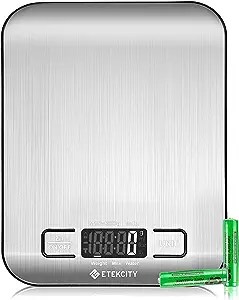
- Food scale
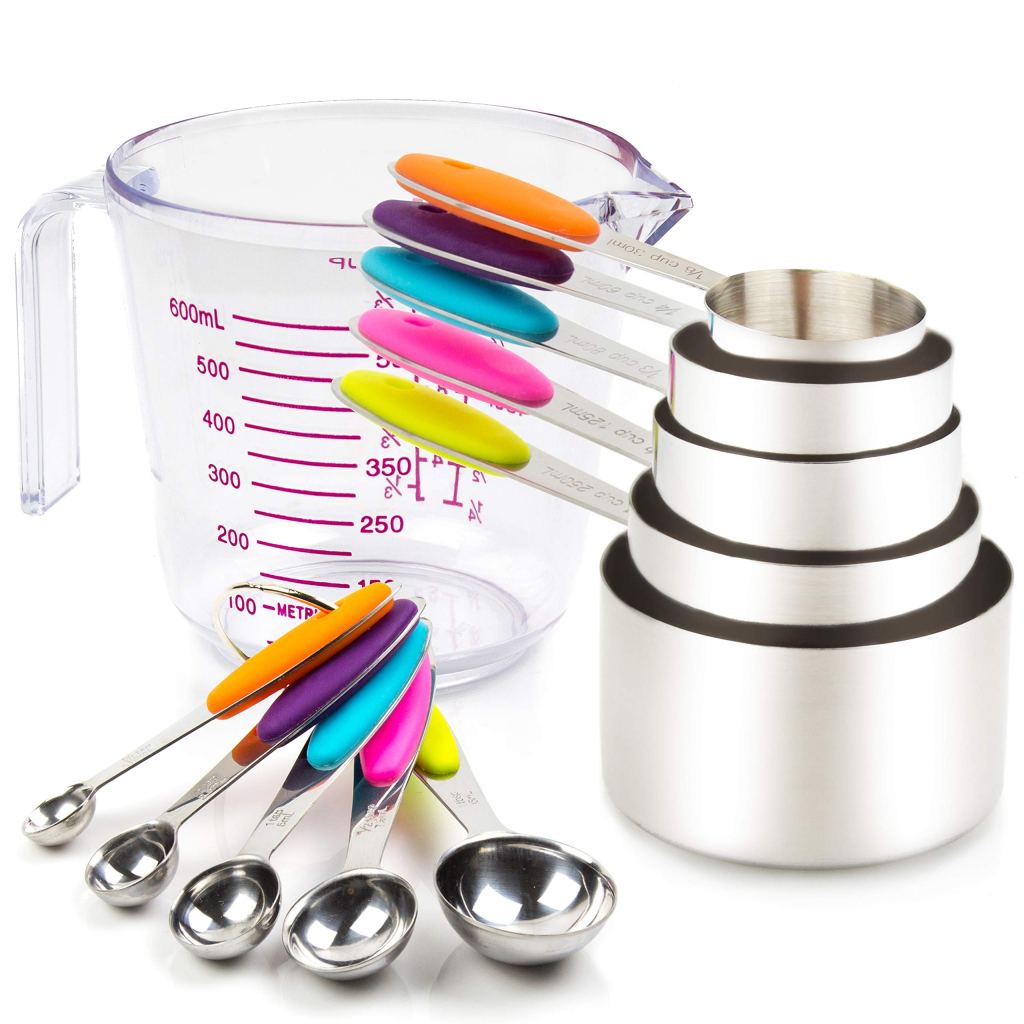
- Measuring cups and spoons
- Hand method
Food scale (most accurate)
Measuring cups and spoons (2nd most accurate)
Hand method (least accurate)

You can also use plate portioning, which is a method of building balanced plates overall opposed to measuring every single thing.
Generally, it will look like this:

How to properly track food
After determining which method you plan to use for measuring food, I recommend physically tracking everything in an app like MyFitnessPal or on paper.
Ideally in an app because it will give you the calories/macros for the measured amount opposed to having to manually calculate it yourself but to each their own!
This will be the best way to determine if you are actually in a calorie deficit, at maintenance or in a surplus.
Although I recommend it, it’s not a great option for every person.
If you’re someone who is prone to obsessive behavior or has suffered from an eating disorder or disordered eating in the past, it may be in your best interest not to track your food intake.
In this case, I would opt for an intuitive style of eating.
As said by Mike Matthews, a renown author in the fitness space, intuitive eating is “is a system of controlling what you eat based on your body’s internal cues, rather than meal plans or other external means.”
So essentially it is eating when you only feel true hunger (not when you’re just bored lol).
But also, it’s not just eating WHATEVER you want, when you want.
It’s more so about eating healthy meals that are still high in protein and balanced overall.
Conclusion
Whether or not you decide to physically track your intake, it’s always a good idea to monitor it with other methods so that you know you’re on track for your goals since nutrition accounts for a good deal of your results, especially your body composition.
Without monitoring your nutrition, it’s likely you’ll be far off from your goal or never come close to it.
Most people are severely under eating protein and overeating calories without realizing it.
If you are unsure of how to properly set calories and macros for yourself, or how to track your food, let’s work together 1:1! I have new spots opening this week.
Until next time,
Coach Emily
-
Stress & Sleep: The Missing Keys to Your Fitness Goals
If you’re training hard and eating well but still not seeing results, it’s time to take a look at two of the most underrated and overlooked factors in fat loss and muscle gain.. stress regulation and sleep quality. Your body doesn’t just need calories and workouts, it needs recovery, hormone balance, and nervous system support.…
-
Revamp Your Metabolism: A Beginner’s Guide to Boosting Energy and Burning Fat
Photo creds Your metabolism is like the engine that powers your body’s energy production and weight management. It’s responsible for converting the food you eat into energy, fueling your daily activities and bodily functions. However, factors like age, genetics, and lifestyle choices can impact your metabolic rate, leading to sluggishness and difficulty in managing weight.…
-
Avoid These 5 Mistakes When Tracking Calories
Tracking calories can be a powerful tool for managing your weight, improving your health, or achieving specific fitness goals. However, if done incorrectly, it can lead to frustration and less-than-optimal results. Here are five common mistakes to avoid when tracking calories to ensure you get the most out of your efforts. 1. Underestimating Portion Sizes…
-
How to Curb Cravings Without Getting Too Restrictive: Indulging in Moderation
Cravings are a common part of life, and while it’s important to maintain a healthy diet, it’s equally crucial not to get overly restrictive. After all, food is meant to be enjoyed. Finding a balance between curbing cravings and allowing yourself to indulge occasionally can be the key to long-term success in maintaining a healthy…
-
Sticking to Your Fitness and Nutrition Regimen While Traveling
Traveling can be an exciting and enriching experience, but it often throws a wrench in our usual fitness and nutrition routines. Whether you’re on a business trip or vacation, it’s possible to maintain your healthy habits with some planning and creativity. Below are some tips to help you stay on track with your fitness and…
-
A Beginners Guide to Building Strong and Sculpted Legs
Building strong, sculpted legs is a key goal for many gym goers, and for good reason. Strong legs improve overall athletic performance, enhance balance and stability, and play a vital role in daily activities. Plus, they look amazing! Duh. Whether you’re just starting your fitness journey or looking to refine your leg workout routine, this…
 The Freshman Fitness Blog by Emily Robinson
Leave a comment