Building strong, sculpted legs is a key goal for many gym goers, and for good reason. Strong legs improve overall athletic performance, enhance balance and stability, and play a vital role in daily activities. Plus, they look amazing! Duh.
Whether you’re just starting your fitness journey or looking to refine your leg workout routine, this beginner’s guide will help you get on the right track.
Why focus on leg training?
Before diving into the how, let’s discuss the why. Leg training is essential for several reasons:
- Functional Strength: Strong legs make everyday tasks like walking, climbing stairs, and lifting objects easier.
- Injury Prevention: Well-developed leg muscles help support joints and reduce the risk of injuries.
- Improved Athletic Performance: From running to jumping, strong legs enhance overall athletic ability.
- Balanced Physique: Building leg muscles ensures a balanced and aesthetically pleasing physique.
Key leg muscles:
Quadriceps: Located at the front of the thigh, responsible for extending the knee.
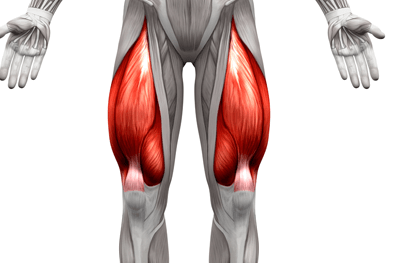
Hamstrings: Located at the back of the thigh, responsible for bending the knee and extending the hip.
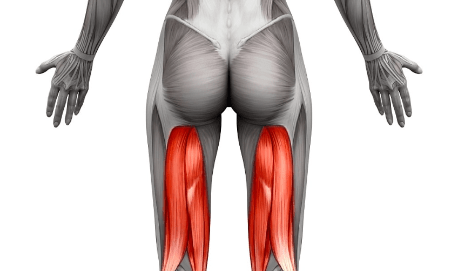
Glutes: The muscles of your buttocks, crucial for hip extension and overall lower body strength.
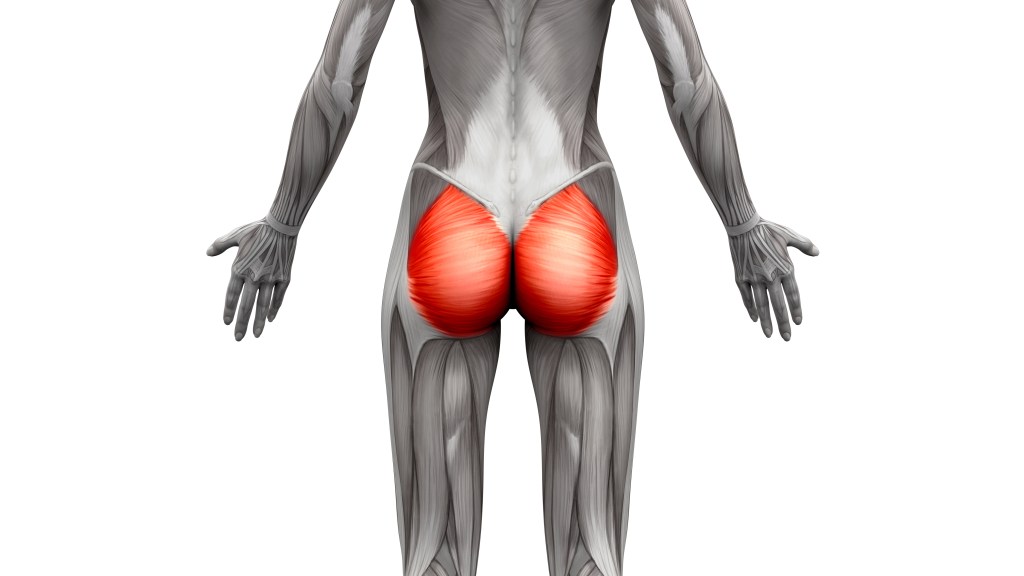
Calves: Located at the back of the lower leg, responsible for plantarflexing the foot (pointing toes downward).
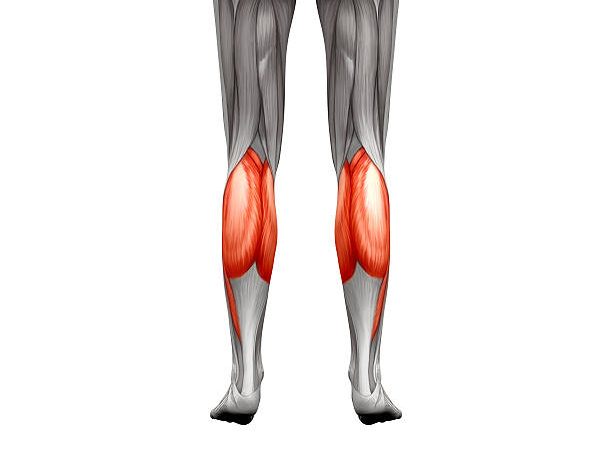
The anatomy and choice of leg exercises
The quadriceps are required to work hard to extend the knee and lift your body back to the starting position.
This means that exercises that go into deep knee flexion will target the quads most effectively.
For this to happen, knees will travel past toes.
Examples of great compound quad exercises would be a quad biased Bulgarian split squat or lunge variation, a hack or pendulum squat, an “ass to grass” barbell squat, goblet squats, sissy or pistol squats, etc.
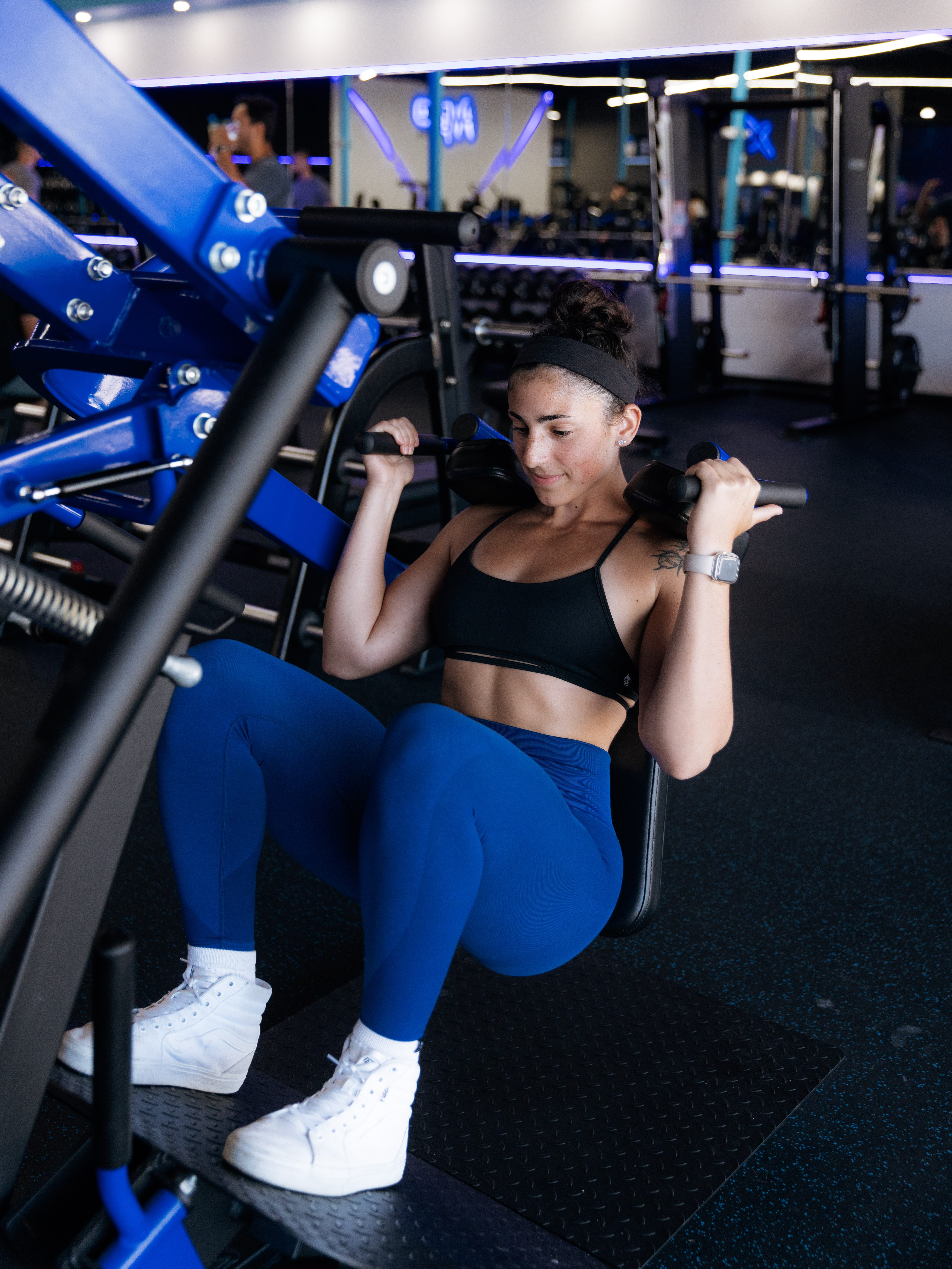
The hamstrings primarily function to extend the hip and flex the knee.
All we need to work these out is to get a full stretch or squeeze on them.
For example, the straight leg deadlift gets a full stretch on your hamstrings since your knees are mostly straight and the typical hamstring curl will contract the hamstring fully (gets a good squeeze on them).
Many compound exercises that target the hamstrings also will target the glutes since they work so closely together and vice versa.
There are some exercises where you can tweak form slightly to focus on your hamstrings instead of glutes simply by straightening your knees close to full extension (but not locked out) such as a RDL, good morning or even a glute hyperextension.
For glutes, full hip flexion is particularly effective because it places the muscles in a position where they are both stretched and engaged throughout a large range of motion.
This is why for most glute exercises, we focus on what is called the hip hinge.

An ideal hip hinge is where our hips are fully extended backwards (max stretch) while our spine remains neutral.
Great examples of compound glute exercises are glute biased RDL variations (see above), hip thrusts, glute bridges, glute biased Bulgarian split squats and lunge variations, parallel squats and glute hyperextensions.
Calves… do I even need to touch on these?
Calf raises.
Different variations.
That is all.
Quad vs. glute biased exercise variations
Many compound exercises such as squats, lunges, BSS, leg press, steps ups, etc. can be tweaked to target the glutes over the quads or the quads over the glutes.
This is especially helpful for focused work.
Squats
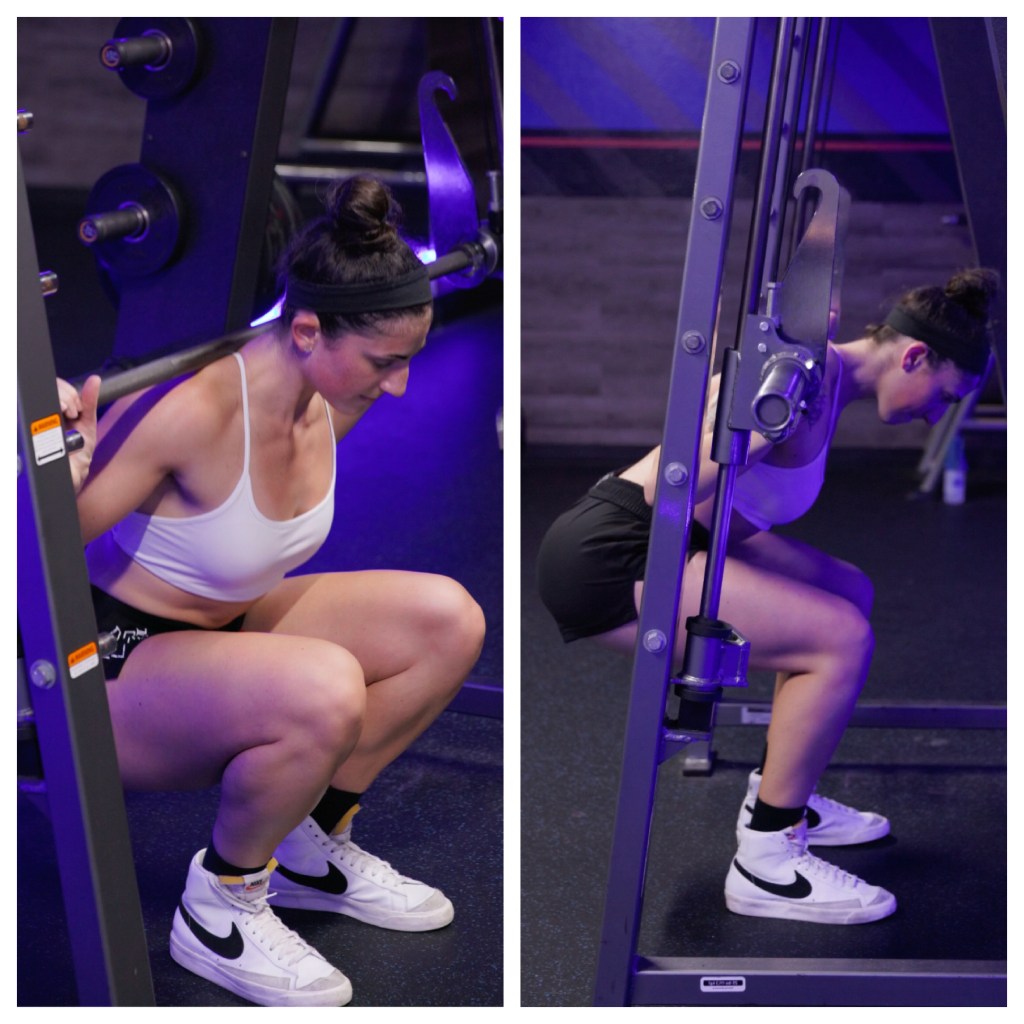
Left – quad biased Right – glute biased
BSS
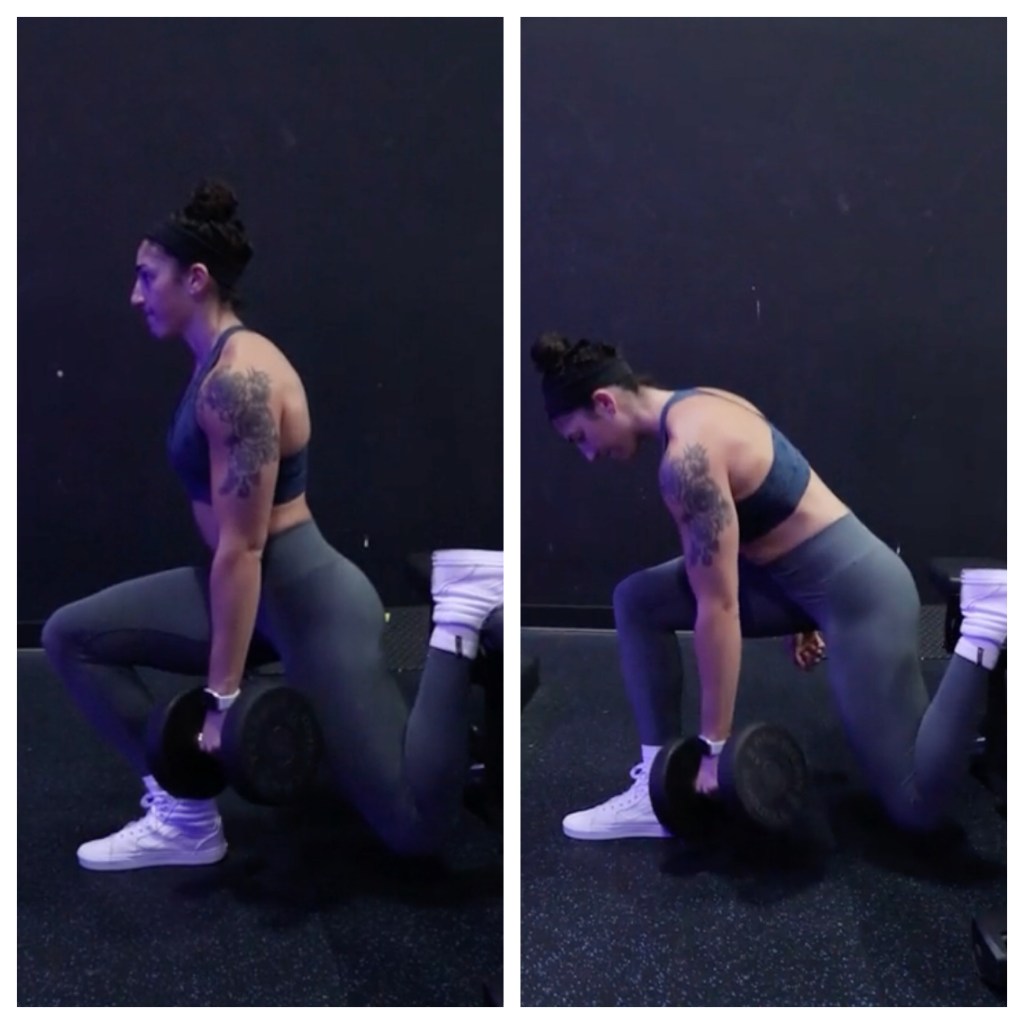
Left – quad biased Right – glute biased
Lunge
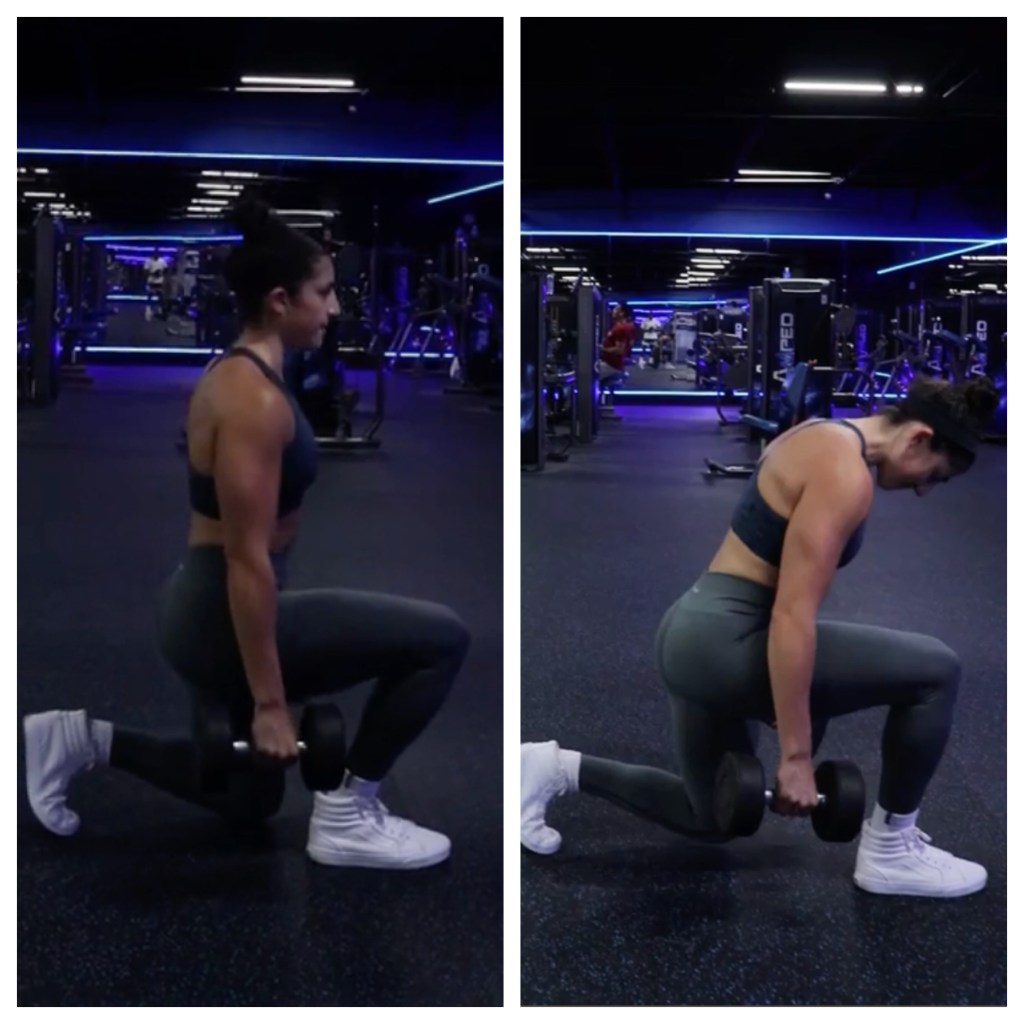
Left – quad biased Right – glute biased
Leg press
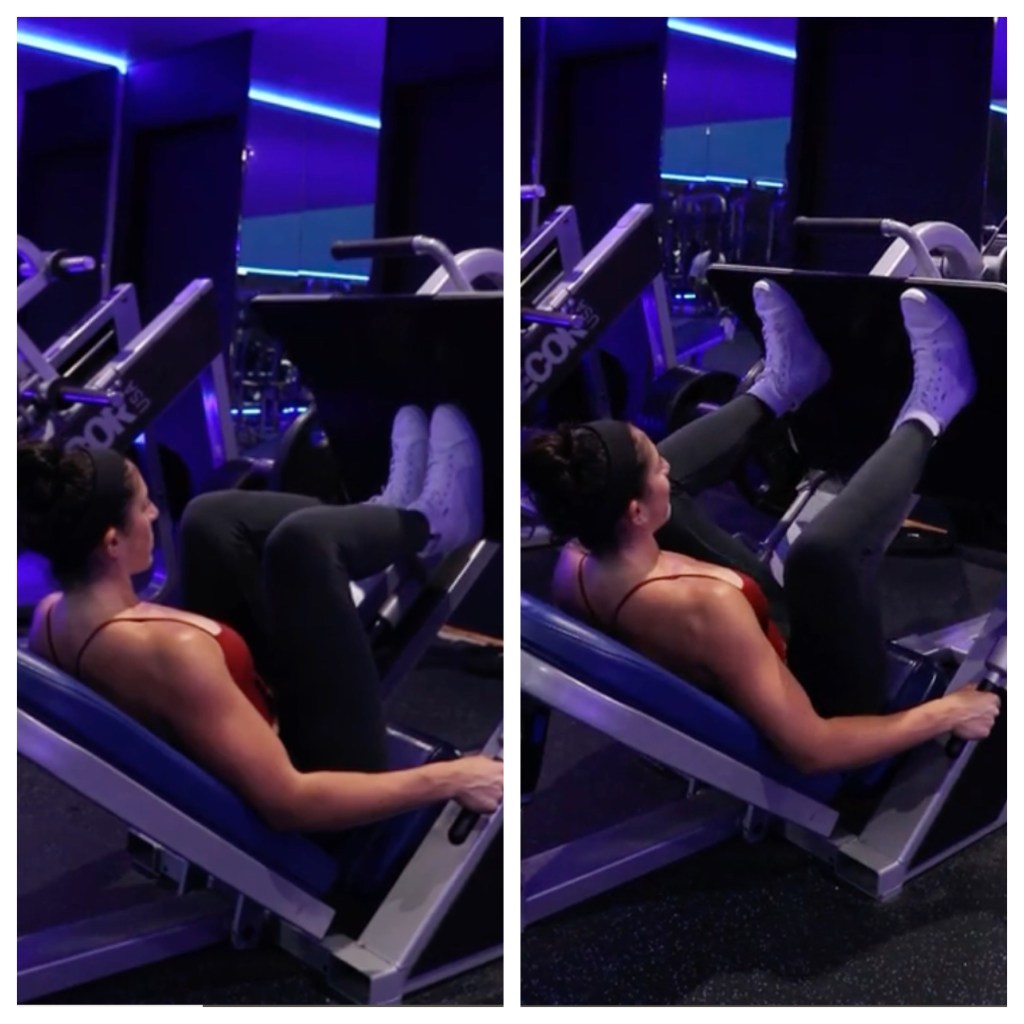
Left – quad biased Right – glute/hammie biased
In most exercises, you’ll notice the quad biased requires an upright trunk position and the knee traveling past the toe.
For the glute biased, you’ll notice a forward leaning trunk position, and the knee does not travel past the toe. Generally, its closer to a right angle.
This can also be done for step up variations as well.
For the leg press specifically, a low and narrow foot positioning will target the quads (more knee flexion) while a high shoulder width position will target more of the glutes and hams (more hip flexion).
What about those pesky inner thighs?
To target the inner thighs, pretty much any variation of a sumo exercise will do that.
Sumo deadlifts, squats, etc.
Additionally, hip adductions will target those as well if you want more isolated work.
Remember a sumo requires a wider stance with the hands positioned inside the legs, toes pointed out.
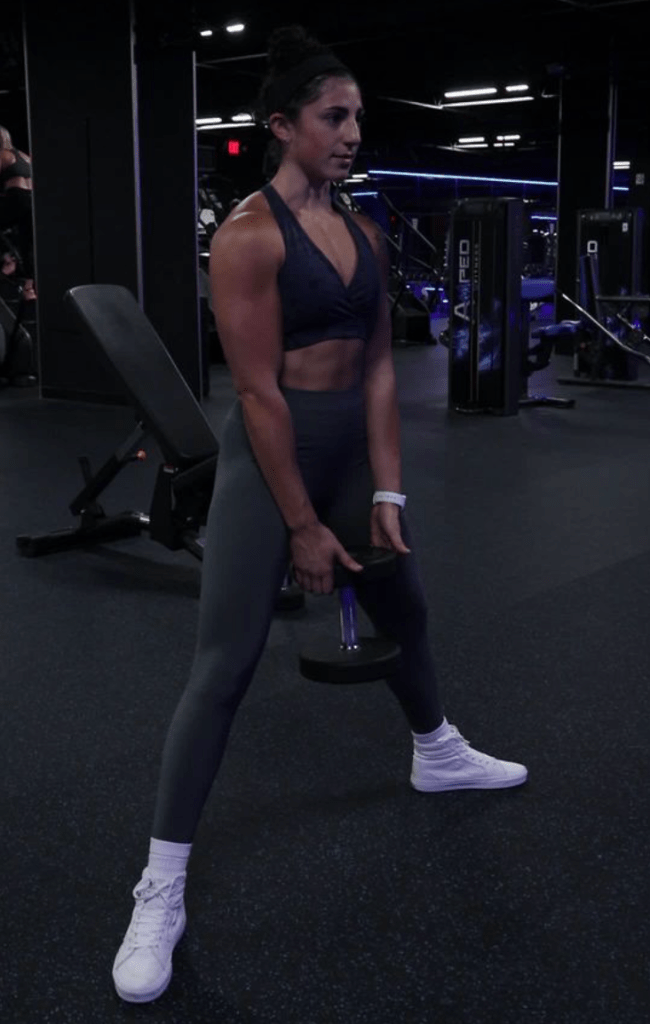
It can be a quite uncomfortable stance, especially if you are immobile like me 🥸.
Conclusion
For a full guide of how many reps and sets you should be doing + how to select exercises strategically for your workouts, check out my beginner’s guide on how to make your own workouts.
You can also check out my beginner’s guide on how to calculate your calories and macros to figure out how you should be eating for your specific goal.
And if you really don’t feel like figuring that all out on your own, I totally get it. It’s a lot of work.
I would know best as its quite literally my job to do all of that for you.
I have 2 spots remaining open for the month of May and I would love to take all that stress away from you!
Stress is bad for your goals afterall.
You can click here to apply to work with me 1:1.
Until next time,
Coach Emily
Check out some of my other posts below:
-
Former Athlete Grocery Haul: Everything I Buy to Stay Lean, Strong & Athletic
When you stop playing sports, grocery shopping changes. During your athletic career, you probably didn’t think twice about grabbing a bagel before practice, eating a huge dinner after games, or stopping for fast food with teammates. Your training schedule gave you structure, and your body was constantly burning energy. Then sports ended. Suddenly, you’re sitting…
-
Why Former Female Athletes Struggle to Stay Lean After Sports (And How to Get Your Athletic Body Back)
If you’ve been following Freshman Fitness for a while, you may notice things look a little different around here. Over the past several years of coaching women through weight loss, strength training, and building healthier habits, I started noticing something. Many of the women I worked with shared a similar story. They were former competitive…
-
Understanding Weight Loss Medications (GLP-1, GIP): What Every Beginner Should Know
If you’ve spent more than five minutes in the fat loss space recently, you’ve probably heard people talking about semaglutide, tirzepatide, and retatrutide. Some people call them “miracle drugs.” Others think they’re dangerous. The truth is somewhere in the middle. These medications can be incredibly effective for weight loss, but understanding the differences between them…
-
Breathe Your Way to Better Workouts: How Your Nervous System Shapes Fitness
Photo cred Most people think hitting fitness goals comes down to reps, sets, and macros. But here’s the thing… your body doesn’t just run on protein shakes and willpower. It runs on states. The state of your nervous system dictates a lot about your performance and recovery. And the sneaky but powerful lever you have…
-
Stress & Sleep: The Missing Keys to Your Fitness Goals
If you’re training hard and eating well but still not seeing results, it’s time to take a look at two of the most underrated and overlooked factors in fat loss and muscle gain.. stress regulation and sleep quality. Your body doesn’t just need calories and workouts, it needs recovery, hormone balance, and nervous system support.…
-
Revamp Your Metabolism: A Beginner’s Guide to Boosting Energy and Burning Fat
Photo creds Your metabolism is like the engine that powers your body’s energy production and weight management. It’s responsible for converting the food you eat into energy, fueling your daily activities and bodily functions. However, factors like age, genetics, and lifestyle choices can impact your metabolic rate, leading to sluggishness and difficulty in managing weight.…


Leave a comment