Building strong, sculpted legs is a key goal for many gym goers, and for good reason. Strong legs improve overall athletic performance, enhance balance and stability, and play a vital role in daily activities. Plus, they look amazing! Duh.
Whether you’re just starting your fitness journey or looking to refine your leg workout routine, this beginner’s guide will help you get on the right track.
Why focus on leg training?
Before diving into the how, let’s discuss the why. Leg training is essential for several reasons:
- Functional Strength: Strong legs make everyday tasks like walking, climbing stairs, and lifting objects easier.
- Injury Prevention: Well-developed leg muscles help support joints and reduce the risk of injuries.
- Improved Athletic Performance: From running to jumping, strong legs enhance overall athletic ability.
- Balanced Physique: Building leg muscles ensures a balanced and aesthetically pleasing physique.
Key leg muscles:
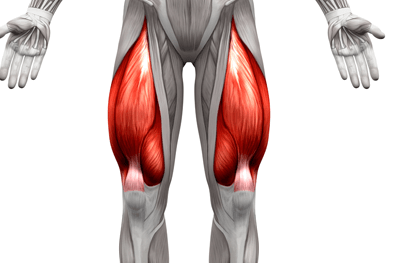
Quadriceps: Located at the front of the thigh, responsible for extending the knee.
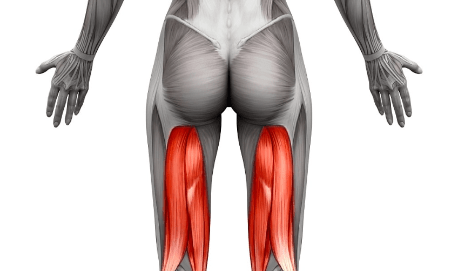
Hamstrings: Located at the back of the thigh, responsible for bending the knee and extending the hip.
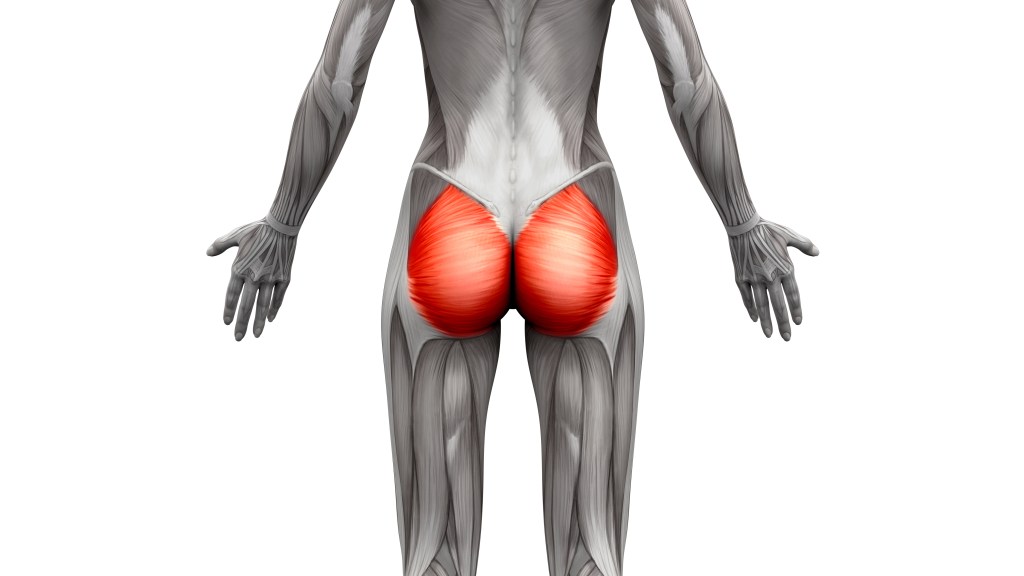
Glutes: The muscles of your buttocks, crucial for hip extension and overall lower body strength.
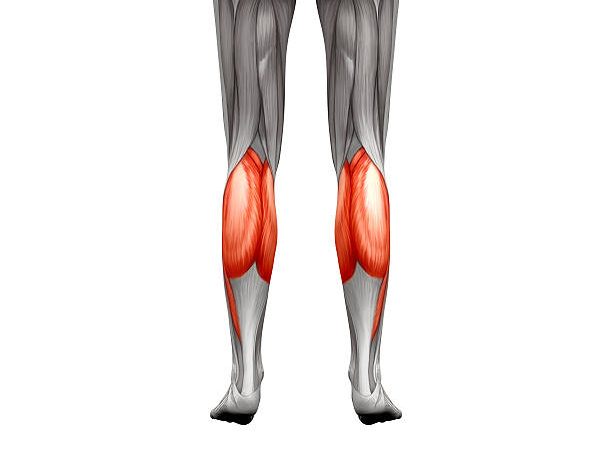
Calves: Located at the back of the lower leg, responsible for plantarflexing the foot (pointing toes downward).
The anatomy and choice of leg exercises
The quadriceps are required to work hard to extend the knee and lift your body back to the starting position.
This means that exercises that go into deep knee flexion will target the quads most effectively.
For this to happen, knees will travel past toes.
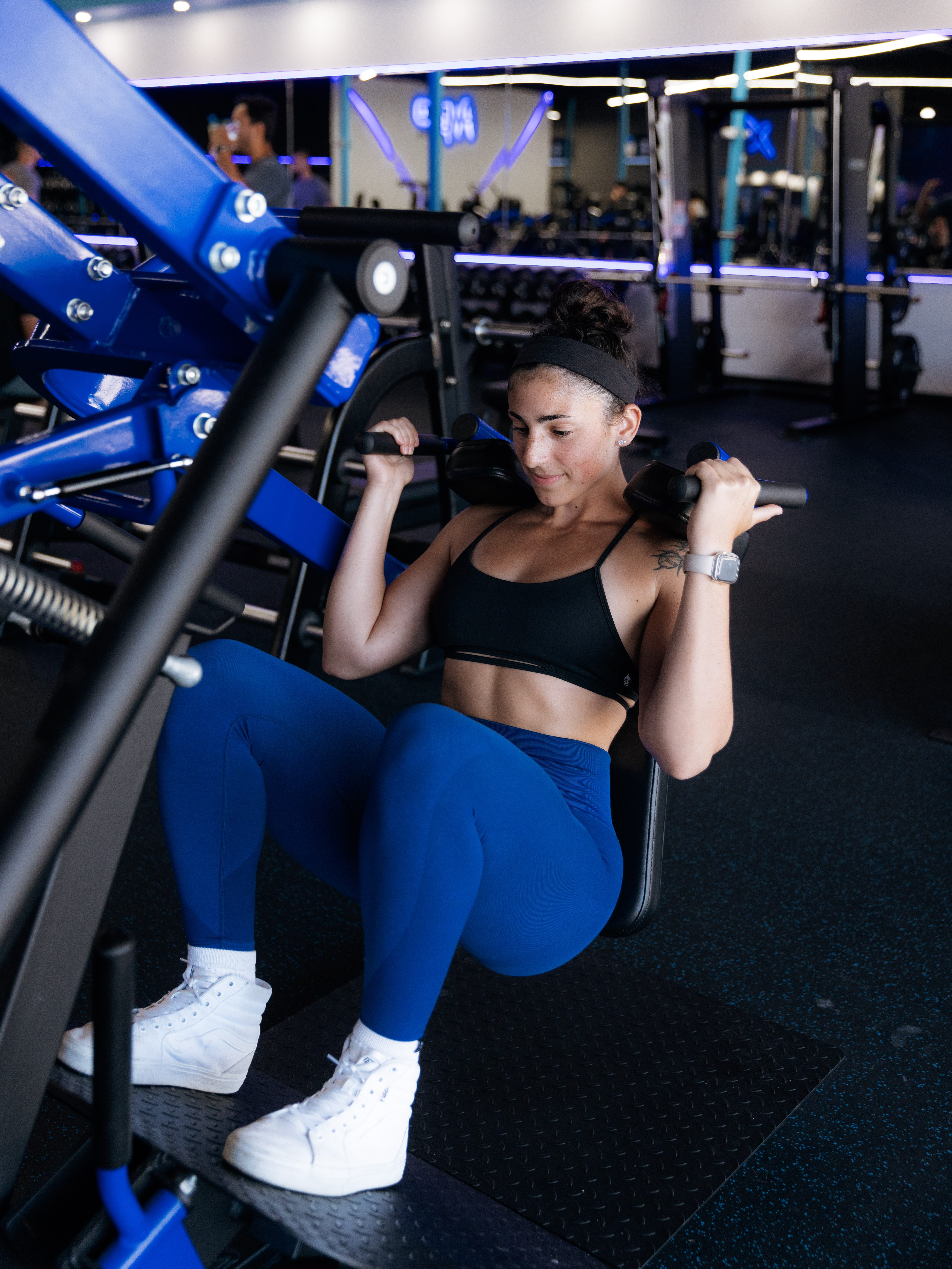
Examples of great compound quad exercises would be a quad biased Bulgarian split squat or lunge variation, a hack or pendulum squat, an “ass to grass” barbell squat, goblet squats, sissy or pistol squats, etc.
The hamstrings primarily function to extend the hip and flex the knee.
All we need to work these out is to get a full stretch or squeeze on them.
For example, the straight leg deadlift gets a full stretch on your hamstrings since your knees are mostly straight and the typical hamstring curl will contract the hamstring fully (gets a good squeeze on them).
Many compound exercises that target the hamstrings also will target the glutes since they work so closely together and vice versa.
There are some exercises where you can tweak form slightly to focus on your hamstrings instead of glutes simply by straightening your knees close to full extension (but not locked out) such as a RDL, good morning or even a glute hyperextension.
For glutes, full hip flexion is particularly effective because it places the muscles in a position where they are both stretched and engaged throughout a large range of motion.
This is why for most glute exercises, we focus on what is called the hip hinge.

An ideal hip hinge is where our hips are fully extended backwards (max stretch) while our spine remains neutral.
Great examples of compound glute exercises are glute biased RDL variations (see above), hip thrusts, glute bridges, glute biased Bulgarian split squats and lunge variations, parallel squats and glute hyperextensions.
Calves… do I even need to touch on these?
Calf raises.
Different variations.
That is all.
Quad vs. glute biased exercise variations
Many compound exercises such as squats, lunges, BSS, leg press, steps ups, etc. can be tweaked to target the glutes over the quads or the quads over the glutes.
This is especially helpful for focused work.
Squats
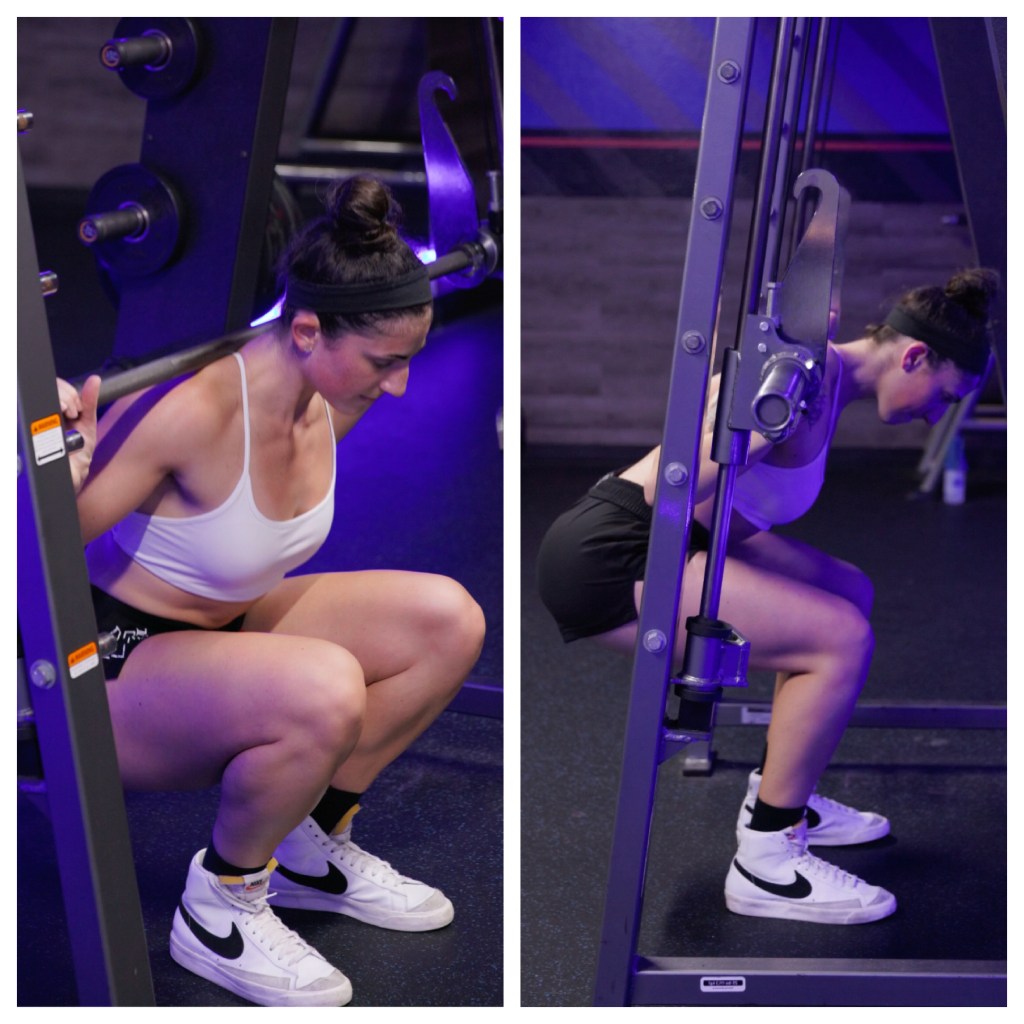
Left – quad biased Right – glute biased
BSS
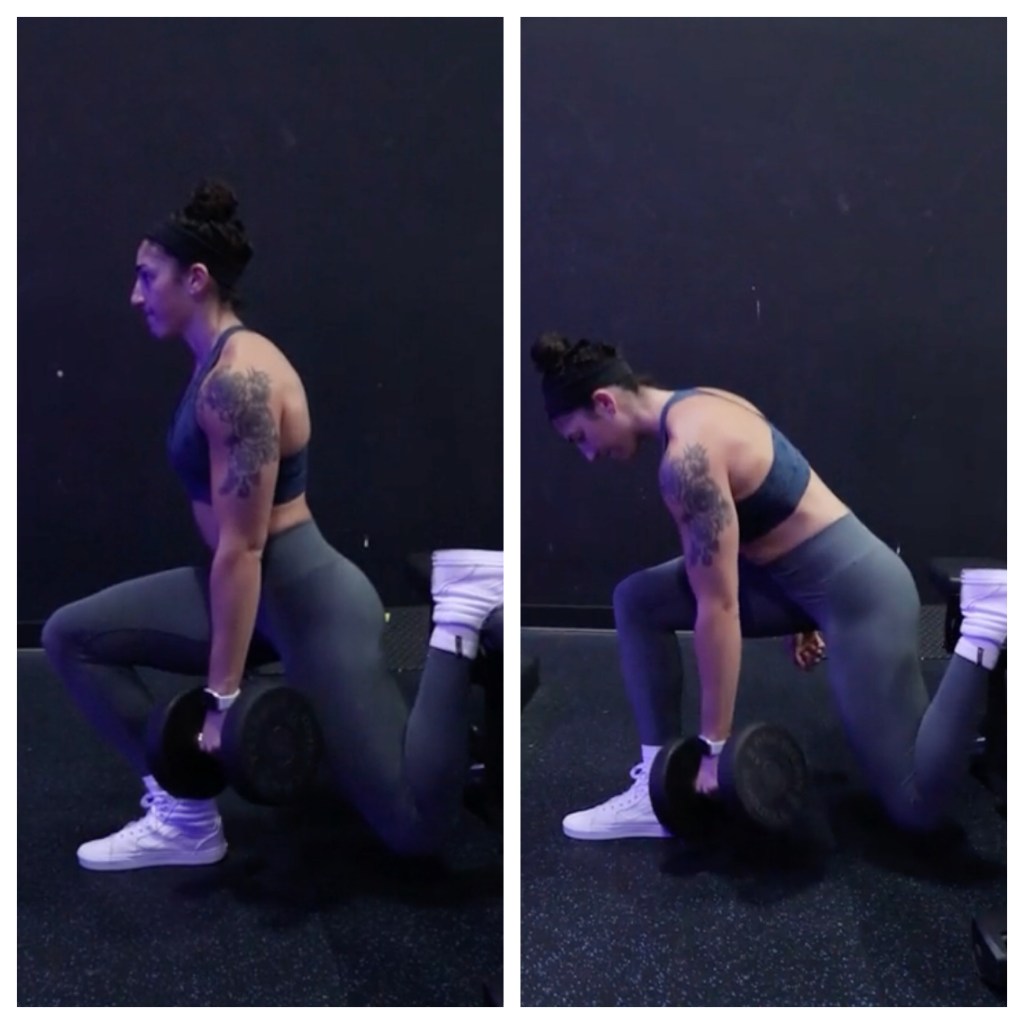
Left – quad biased Right – glute biased
Lunge
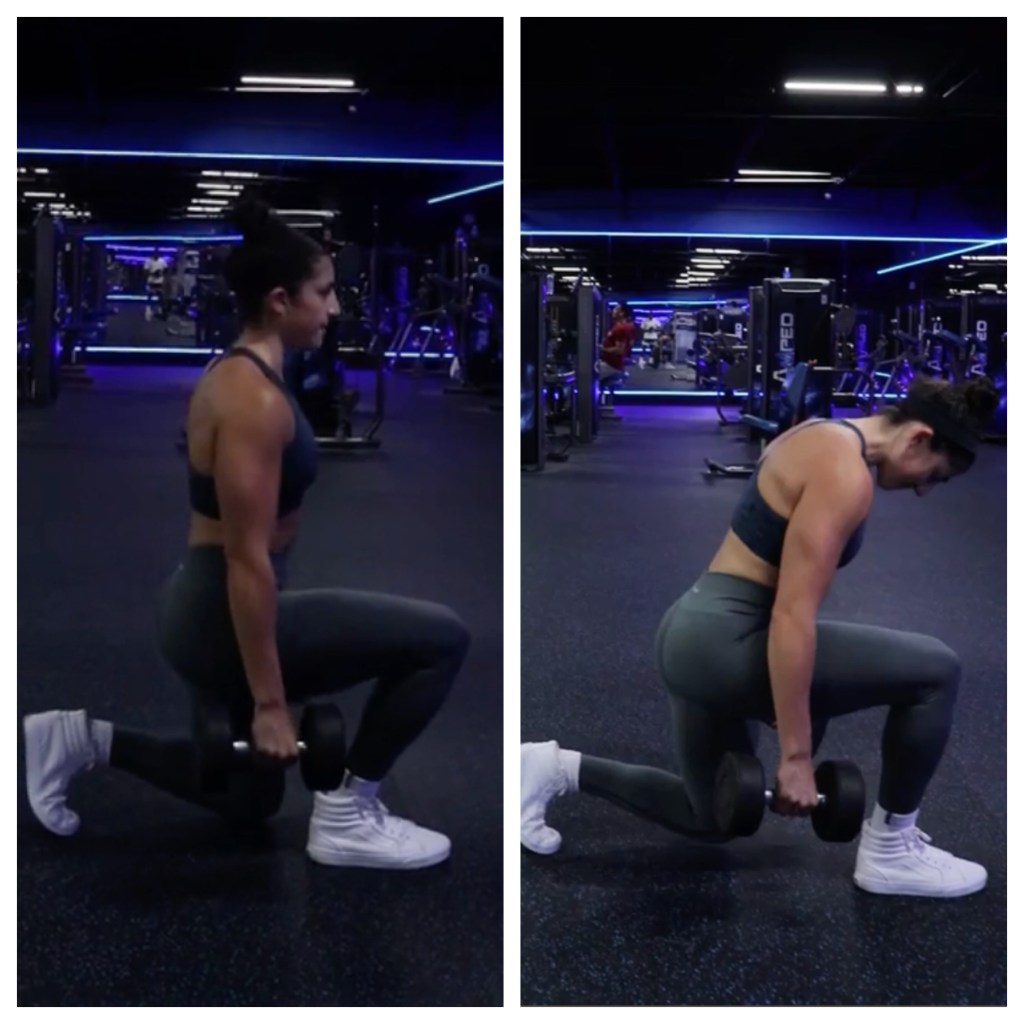
Left – quad biased Right – glute biased
Leg press
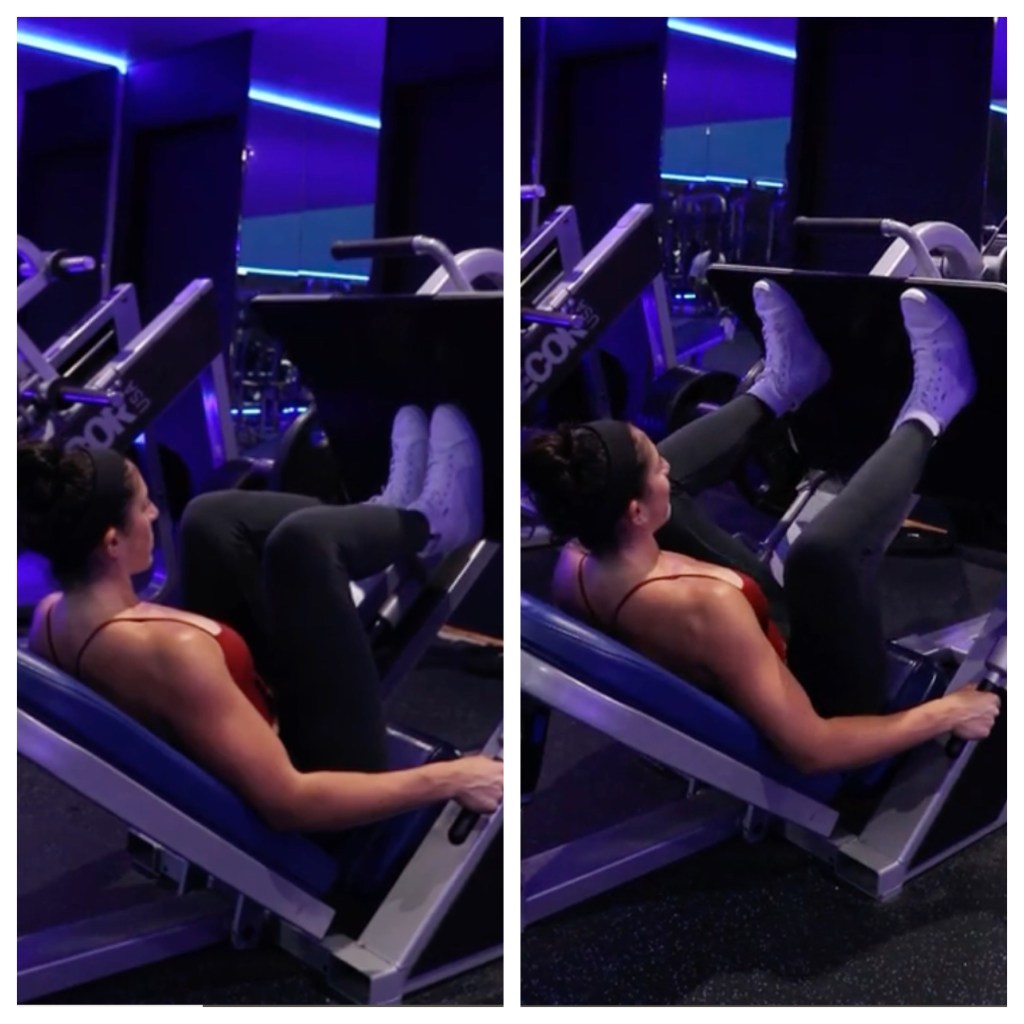
Left – quad biased Right – glute/hammie biased
In most exercises, you’ll notice the quad biased requires an upright trunk position and the knee traveling past the toe.
For the glute biased, you’ll notice a forward leaning trunk position, and the knee does not travel past the toe. Generally, its closer to a right angle.
This can also be done for step up variations as well.
For the leg press specifically, a low and narrow foot positioning will target the quads (more knee flexion) while a high shoulder width position will target more of the glutes and hams (more hip flexion).
What about those pesky inner thighs?
To target the inner thighs, pretty much any variation of a sumo exercise will do that.
Sumo deadlifts, squats, etc.
Additionally, hip adductions will target those as well if you want more isolated work.
Remember a sumo requires a wider stance with the hands positioned inside the legs, toes pointed out.
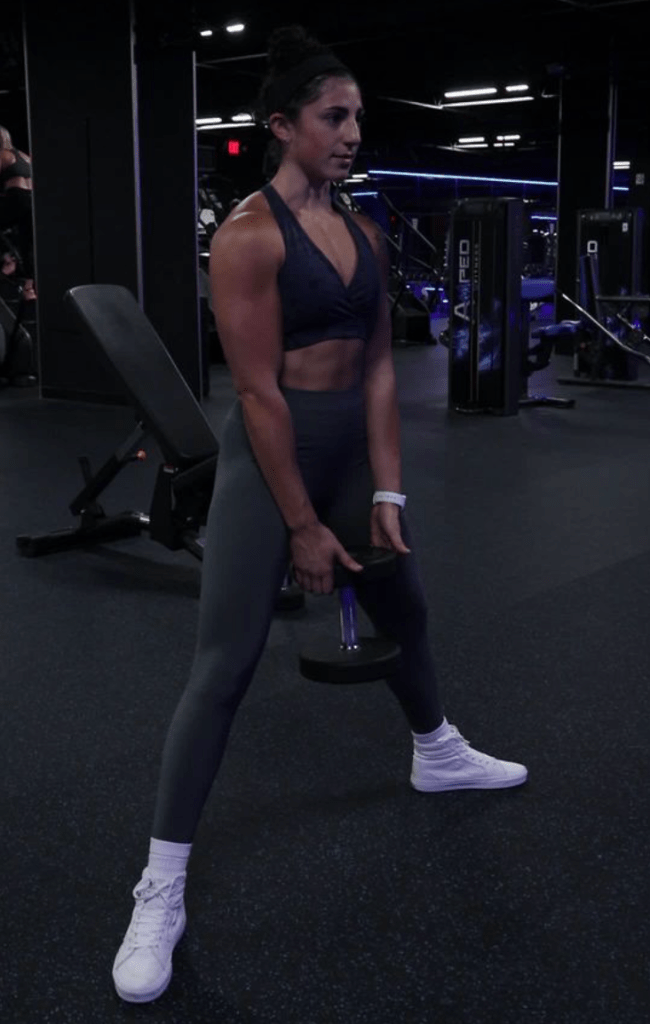
It can be a quite uncomfortable stance, especially if you are immobile like me 🥸.
Conclusion
For a full guide of how many reps and sets you should be doing + how to select exercises strategically for your workouts, check out my beginner’s guide on how to make your own workouts.
You can also check out my beginner’s guide on how to calculate your calories and macros to figure out how you should be eating for your specific goal.
And if you really don’t feel like figuring that all out on your own, I totally get it. It’s a lot of work.
I would know best as its quite literally my job to do all of that for you.
I have 2 spots remaining open for the month of May and I would love to take all that stress away from you!
Stress is bad for your goals afterall.
You can click here to apply to work with me 1:1.
Until next time,
Coach Emily
Check out some of my other posts below:
-
Functional Training: A Way Of Daily Life
When many people think of training in the gym, they generally think of the typical bodybuilding style workout. But the truth is that there are so many different types of ways you can workout. Bodybuilding style is definitely the most popular and makes the most sense if you have a specific goal of losing fat…
-
Diet Culture: What Is It & Why Is It Harmful?
When many people think of dieting, they think of eating healthy. These terms are not necessarily interchangeable though. According to Google, diet culture, “promotes restriction, obsession around food and exercise, avoiding and stigmatizing fatness, and anxiety about the social, physical, and romantic consequences of failing to perform these behaviors”. In short terms, dieting involves a…
-
Overtraining: Warning Signs & How to Counteract It
A common misconception many beginners in the gym have is that the more exercise, the better. In theory, yes it makes sense that the more work you put in, the more results you should get because with most things in life, the more work you put in, the better the outcome is. The more effort…
-
Top 6 Gym Bag Accessories You Need + Bonus Tips
Most people carry a trusty bag to the gym, but what do they actually keep inside of that thing? While it may vary a lot, we will go over the top 6 accessories you should be carrying in your gym bag for ultimate success + we might go over a few bonus tips so make…
-
Hormones, Gut Health, Periods, Pills and The Effect on Physical Fitness
If you’ve ever been stuck at a weight plateau and NOTHING seems to help, it may be time to look inwards and no I don’t really mean mentally or emotionally but rather inside of your body. Your gut, your thyroid, your hormones. These are all things that majorly effect your body and your overall ability…
-
Workout Plateaus: What To Do When You Stop Seeing Progress
If you just started strength training in the last few months, there is a good chance that you will stop making progress at some point in the near future if you haven’t already. According to Google, a workout plateau is, “a stage of progress that happens when your body gets used to the demands of…


Leave a comment